ACIDS Storage Principles
Key Storage Principles
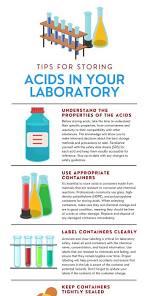
- Dedicated Cabinets: Use acid-resistant (e.g., polyethylene-lined steel) cabinets with sumps for spills.
- Segregation:
- Acids from Bases: Never store acids and bases together due to violent reactions.
- Oxidizing Acids: Keep nitric acid and perchloric acid separate from organic acids, flammables, and reducing agents.
- Organic Acids: Store organic acids (like acetic) away from inorganic acids (like sulfuric).
- Reactive Materials: Separate acids from active metals, cyanides, and sulfides.
- Ventilation: Store volatile acids or fuming acids in ventilated enclosures or fume hoods (not for long-term storage) to control fumes.
- Containers & Labels:
- Use original containers or compatible materials (glass, specific plastics).
- Ensure clear labels with chemical name, hazard info, and date.
- Use secondary containment trays (e.g., polyethylene) for all bottles, especially large ones.
Specific Acid Considerations
- Nitric Acid: Strong oxidizer; store in its own compartment within the acid cabinet, away from organics.
- Sulfuric Acid (Conc.): Strong dehydrating agent; reacts violently with organics (sugar, wood).
Glacial Acetic Acid: Flammable; store away from nitric acid.

Safety & Maintenance
- PPE: Have gloves, goggles, and lab coats readily available.
- Spill Kits: Keep acid spill kits nearby.
- Inspect Regularly: Check for leaks, deteriorated labels, or improper storage.